
A loop store layout is a circular or “racetrack” pathway that guides shoppers through every department. There are many ways to adapt it to fit your store’s size, style, and goals.
Some stores in New York feel like they’re guiding you on a little adventure through every aisle. That’s not a coincidence — it’s all about the store layout, which is how shelves, displays, and aisles are arranged to make shopping more efficient.
The loop store layout is designed in the shape of a large loop that guides shoppers through the store. It helps them notice more products along the way. It’s simple, clever, and works for stores of all kinds, from small boutiques to big supermarkets.
What is a Loop Store Layout?
From a store owner’s perspective, the loop layout, sometimes called a racetrack layout, is more than just a design choice. At its core, it’s built around a central “racetrack” aisle that guides shoppers through the entire store, encouraging them to explore every department.
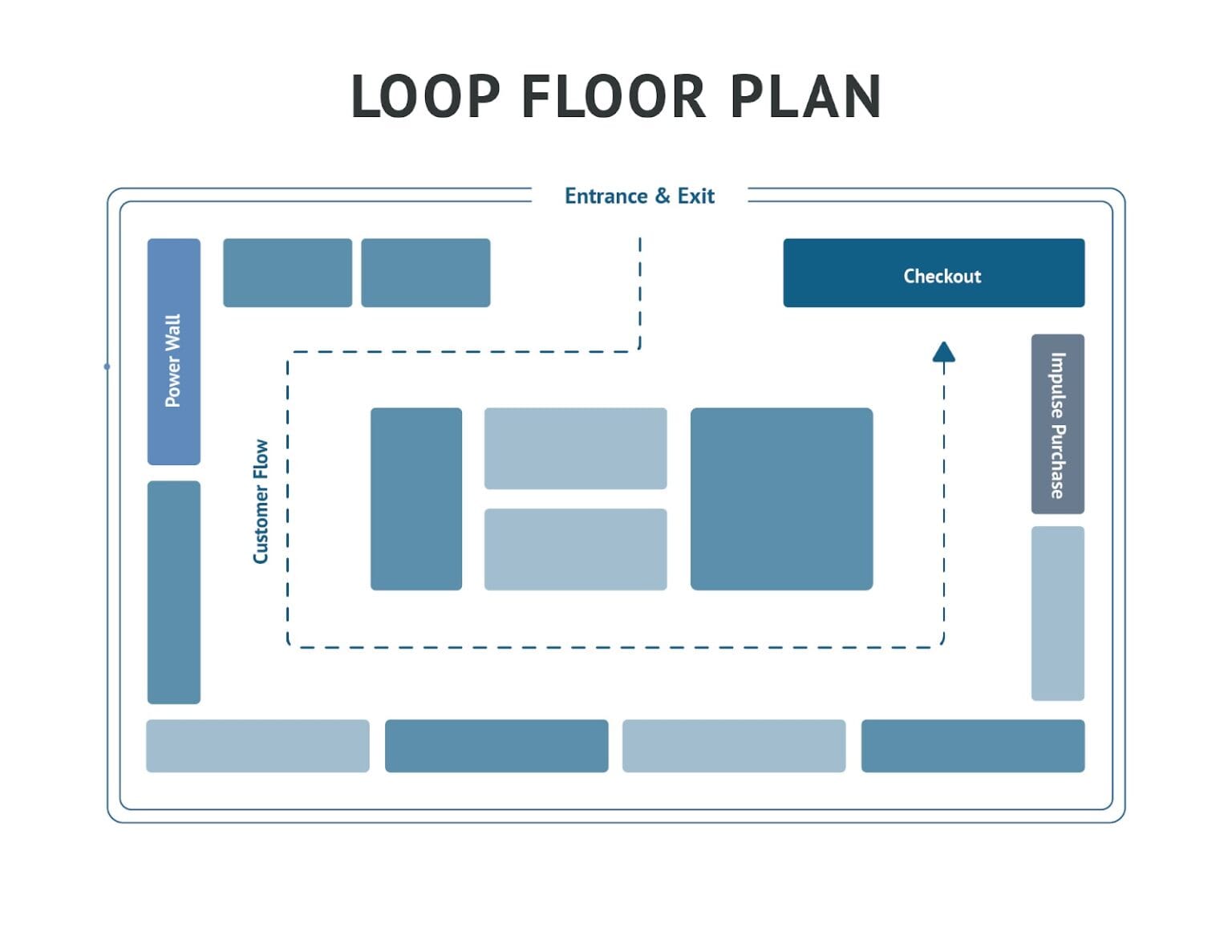
Imagine a single, flowing pathway that gently leads customers past each section, from fresh produce to home goods, or from apparel to accessories.
As customers follow this main loop, they naturally encounter more products than they might if left to wander freely. Each turn along the pathway is an opportunity to showcase your best items, seasonal specials, or hidden treasures tucked away in smaller corners of the store.
Key Features of the Loop Store Layout
When you get the idea behind the loop layout, you can see how every element is thoughtfully placed for effectiveness. Here’s a closer look at the features that bring it all together:
A clearly defined main aisle
The loop layout shines in how it organizes products into clear zones. Each section sits along the main path, making it easy for shoppers to find what they came for, and to notice things they hadn’t thought about.
For store owners, it’s a storytelling tool: fresh produce flows into dairy, casual clothing moves naturally into accessories, and the whole store feels connected and purposeful.
Department zoning along the loop
The backbone of the loop layout is a single, continuous aisle that guides customers through the entire store. This main pathway subtly directs foot traffic so that customers pass by each department.
Endcaps and displays as focal points
Strategically placed displays and endcaps draw attention to featured products or promotions, acting as visual signposts that naturally guide shoppers through the store.
For instance, a seasonal display at the end of an aisle might showcase a new line of flavored teas, paired with a small sampling station. Shoppers walking by are more likely to stop, try a product, and even add it to their carts.
Advantages of Loop Store Layout
Once you’ve mapped out your store with the loop design in mind, the next question becomes “What makes it worth the effort?” From smoother traffic flow to more product visibility, it’s a setup that works in a variety of retail settings, from cozy New York boutiques to sprawling supermarkets. Here’s how:
Streamlined flow
When you choose the loop layout, you’re essentially giving your customers a clear, easy path through your store. This means fewer dead ends, less confusion, and a smoother experience overall.
In a busy market like Brooklyn or the shopping districts of Albany, where foot traffic can be heavy, guiding your shoppers along one main “racetrack” aisle means less congestion and a more comfortable flow for everyone.
As a store owner, you’ll notice fewer customers wondering what’s around the corner, and more of them simply following the path you’ve set.
Efficient use of space
One of the biggest advantages of the loop layout is how efficiently it uses space. Since shoppers naturally follow the main path, you can plan your departments and displays to highlight your best-selling items.
Imagine a Manhattan boutique specializing in minimalist clothing or a Rochester lifestyle shop that sells candles, plants, and artisan goods. No corner goes unnoticed because the loop draws customers past every section.
Encourages browsing and impulse buying
When shoppers move steadily through your loop, they naturally encounter more of your inventory. That means items they didn’t plan to buy can catch their eye.
In a city like New York City or in uptown shopping areas such as Syracuse, leveraging that impulse-buy potential is a smart move. According to experts, the loop layout increases the chances that unexpected items will be spotted and purchased.
That means you’re designing for discovery — placing new arrivals or higher-margin products in spots where browsing happens naturally.
Works well for large-format retail stores
If your store is more on the large side (say, a multi-department shop or a big-box location) the loop layout really shines. The design supports many departments and varied product zones, while maintaining a cohesive customer journey.
Large retailers cite this layout as ideal for showing everything without overwhelming the shopper.
Disadvantages of Loop Store Layout
Before deciding that the loop layout is the perfect fit, it’s worth pausing to look at the other side of the equation. While the design can make your store feel organized and engaging, it isn’t ideal for every type of retailer or space.
Can feel restrictive to shoppers who want a quick in-and-out visit
One challenge with the loop layout is that it gently forces customers to follow a set path, which can feel limiting for those who prefer a fast trip.
Think of a neighborhood pharmacy in Queens or a corner convenience store in Buffalo, where regulars often stop in just to grab one or two items. If these shoppers feel like they have to weave through multiple aisles to reach what they need, it can create frustration instead of convenience.
May frustrate time-sensitive customers
Some customers shop with a mission — they know exactly what they want and want to get it quickly. In areas like downtown Manhattan or commuter-heavy parts of Westchester, where people shop between meetings or before catching a train, efficiency is everything.
If the store’s path feels too structured or too long, it might discourage quick visits or repeat trips from busy locals.
Risk of overcrowding during peak shopping hours
The same layout that creates a smooth shopping flow during quiet hours can feel congested during rush times. In high-traffic environment, the single-loop path can cause bottlenecks, especially near popular departments or promotional displays.
This can impact both customer comfort and sales if shoppers feel overwhelmed or unable to browse freely.
Less effective in smaller spaces
While the loop layout shines in medium to large stores, it’s not always the best fit for tighter spaces. A small boutique in Ithaca or a compact specialty shop in Saratoga Springs might find that the defined loop makes the store feel cramped or limits display flexibility.
In these cases, a more open or free-flow layout could allow customers to navigate more naturally.
Best Practices for Designing a Loop Store Layout
If you’ve decided that the loop layout fits your store’s goals, the next step is bringing it to life in a way that feels both functional and inviting. Here’s how to make the most of it:
Keep aisles wide and comfortable
Aisle width can make or break the shopping experience. If your main loop feels cramped, customers might rush through or avoid certain areas altogether. Think of a busy store in a neighborhood. Wide, well-lit aisles allow people to browse comfortably without bumping into each other.
When designing your loop, prioritize flow and comfort over squeezing in extra racks or displays. A little breathing room goes a long way in keeping shoppers engaged.
Use signage to guide and inform
Even though the loop naturally directs movement, signage helps reinforce the journey. Clear, well-placed signs make the layout intuitive for first-time visitors.
For instance, hanging signs can point customers toward key sections like bakery, produce, or checkout, while small chalkboard-style signs can highlight featured collections. These touches don’t just guide. They add personality and let your brand’s voice shine throughout the store.
Balance impulse items with essential categories
A successful loop layout is part strategy, part psychology. You want to balance essentials, like staples or must-buy products, with impulse items that delight and surprise.
You might place popular everyday items near the entrance, while positioning smaller, eye-catching products like candles or handcrafted goods along the loop where browsing naturally slows.
Ensure clear exits and easy navigation
The loop layout shouldn’t feel like a maze. Shoppers should always have a sense of direction and an easy route to checkout or exit.
Stores in high-traffic areas like Times Square or downtown Rochester often use visual cues, like brighter lighting or contrasting flooring, to subtly guide customers toward the end of the loop.
Examples of Successful Loop Store Layouts
If you’re looking for real-world inspiration, there’s no better place to start than retailers that have perfected the loop layout. Observing how popular stores guide shoppers can help you see the principles in action and spark ideas for your own store.
Ikea
IKEA is perhaps the most famous example of a loop layout done right. The moment customers step into an IKEA store, they are guided along a predetermined path that takes them through each department, from living room furniture to kitchen accessories.
Every turn is intentional, showcasing different styles and solutions while subtly encouraging browsing. For store owners, IKEA illustrates how a well-planned loop can maximize exposure to products, even in a massive, multi-department environment.
Target
Target stores also employ loop principles, especially in their larger locations. Shoppers naturally follow a central pathway that connects departments like groceries, home goods, clothing, and electronics.
Strategic displays at the end of aisles highlight promotions or seasonal items, capturing attention without feeling forced. Observing Target shows that the loop layout isn’t just for giant stores — it’s adaptable for retailers of many sizes, which creates a smooth, intuitive shopping experience.
Summary
The loop layout is a smart way to guide shoppers, showcase your products, and make the entire store experience enjoyable. With thoughtful placement, you can make the most of your space, encourage browsing, and ensure every visit feels purposeful.
If you’re ready to transform your store into a space that’s both functional and stylish, consider partnering with Artistic Display. We specialize in commercial furniture installation solutions across New York, designing durable and attractive layouts that enhance the customer experience.
Let us help you create a store that’s not only easy to navigate but also visually compelling.