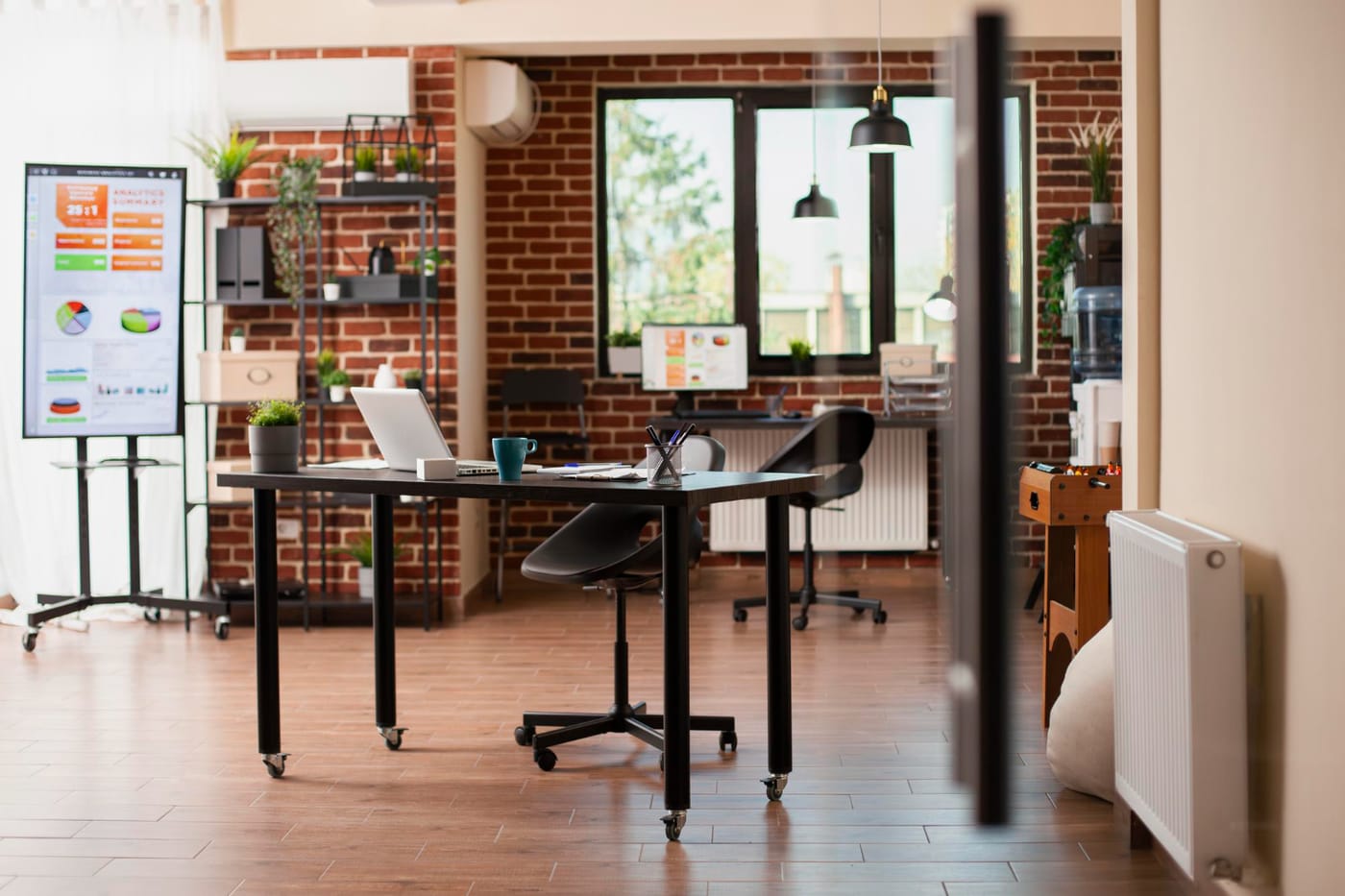
2025 is all about flexible, eco-conscious, and wellness-focused small office design that makes even the coziest spaces feel open, stylish, and inspiring.
Small office design is changing a lot in 2025! With more people working both at home and in the office, spaces need to be flexible, comfortable, and smart.
In New York, where city offices can be cozy and space is tight, designers are getting creative with layouts, colors, and furniture that work for everyone.
This year, offices aren’t just about desks. They’re about eco-friendly materials, natural textures, and spots that make work feel easier and more fun.
10 Small Office Interior Design Trends in 2025
Wondering how to make a small workspace feel anything but cramped? These trends show how thoughtful design can turn limited space into a creative, welcoming hub:
1. Flexible and modular layouts
Imagine walking into your small office and having the freedom to set it up exactly how you need that day.
Adaptable furniture, like desks that fold or can be moved around, and modular work zones make it easy to switch between solo focus time and team collaboration.
Movable partitions give you privacy when you need it, but can disappear when it’s time for a group brainstorm. Multi-use rooms with rolling whiteboards and modular seating let everyone shape the space to fit the project or the people in the room.
With setups like these, even a cozy office can feel open, functional, and ready for whatever the day brings.
2. Earthy tones and natural textures
Working in a small office can feel much calmer when the space wraps you in warm, soothing colors. Shades like soft beiges, warm taupes, and gentle browns, paired with wood finishes and cozy materials, can transform a compact workspace.
These natural textures create a sense of calm that can help you focus and feel more comfortable during the workday. This trend toward cozy minimalism proves that small offices in New York don’t need bright colors or busy décor to make a big impact.
3. Smart tech integration
When you’re working in a small office, nothing kills the vibe like endless cables snaking across your desk or bulky gadgets taking up precious space. That’s why “smart tech integration” is trending strongly in 2025.
You’ll find three major features rising to the top:
- Wireless charging stations embedded into desks or meeting tables so that phones, tablets, and even some laptops can charge without unsightly cords.
- Hidden cables and cleverly managed power/outlet systems that keep the floor and desktop clean. No more trip hazards or eye sores.
- Smart lighting (and other connected systems) that adjust brightness, color temperature, or even shut off when an area is unused.
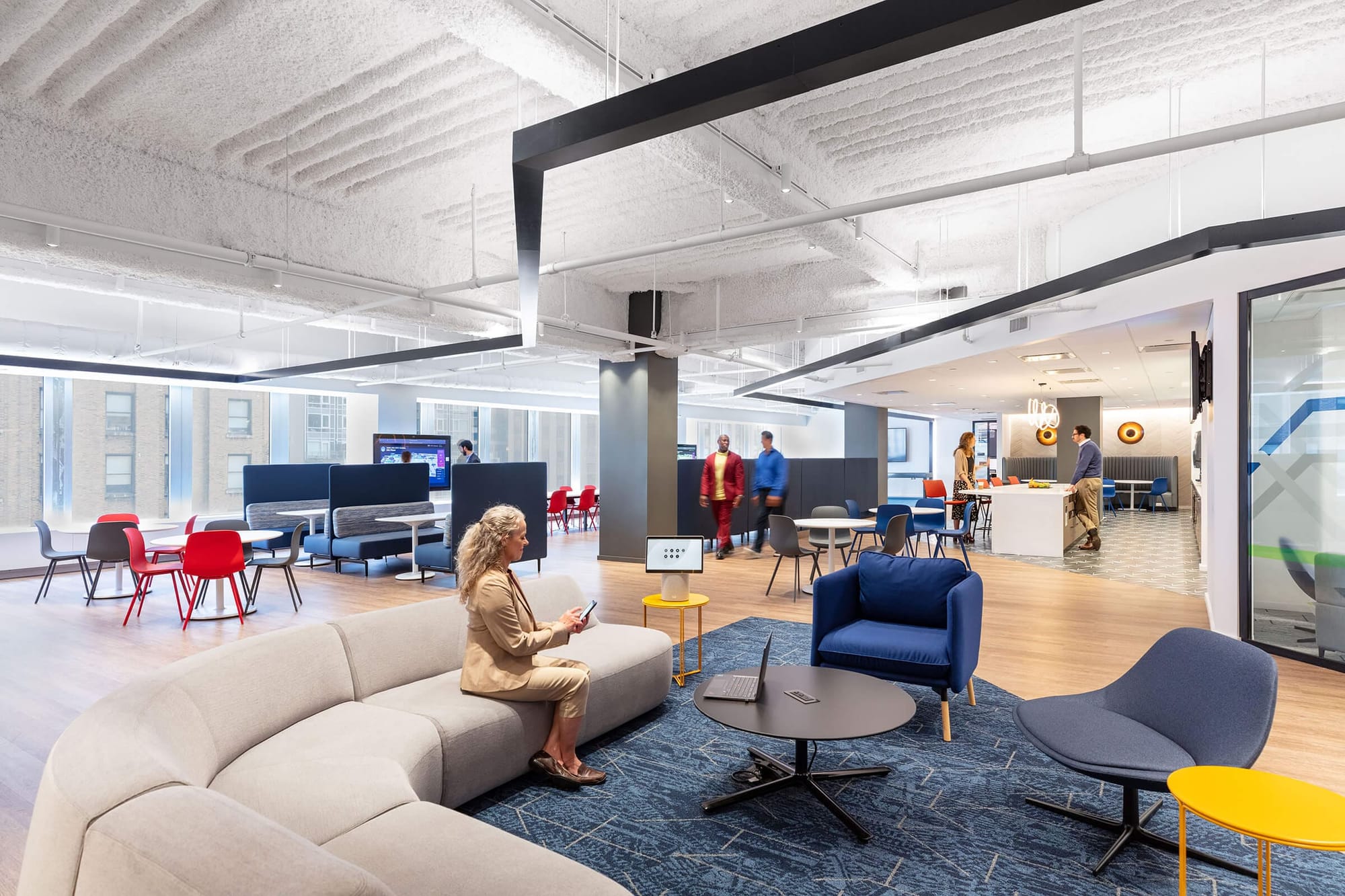
For instance, in a recent example in New York, Cisco’s office at One Penn Plaza uses sensors and integrated technology so that lighting and HVAC adjust based on occupancy and activity.
4. Biophilic design elements
Bringing nature into the office can make even a small space feel fresh, calming, and energizing.
Incorporating plants, natural light, and organic materials like wood, stone, or cork helps connect you to the outdoors, even when you’re inside all day.
One of the hottest trends right now is vertical gardens and indoor green walls, which let offices add a lush, vibrant touch without taking up valuable floor space.
Just a few well-placed plants or a green wall can improve air quality, reduce stress, and make the workspace feel more alive.
5. Sustainable and eco-friendly materials
More offices are embracing sustainability as a core part of their design, not just for style, but for a more responsible workspace.
Recycled wood gives furniture and finishes a warm, natural look while cutting down on waste. Each piece often has a story, which adds a unique touch that feels purposeful.
For example, some small offices repurpose reclaimed barn wood or old shelving into desks and wall panels for a rustic yet modern look that’s full of character.
Low-VOC paints are another must-have. They reduce harmful chemicals in the air, so that you breathe easier and create a safer environment for everyone in the office.
Energy-efficient lighting, such as LED fixtures and smart sensors, brightens up the space while lowering electricity use. The result is a well-lit, inviting office that also saves on energy costs.
In 2025, green design is becoming the new standard, with eco-conscious branding now a key part of how businesses present themselves.
6. Minimalist + functional aesthetic
Less clutter, more impact — that’s the idea behind today’s minimalist office design. In small spaces, every piece of furniture should work double duty, combining clean lines, hidden storage, and subtle accents that bring character without adding chaos.
This approach isn’t about being plain. It’s about designing with purpose. When everything has its place, the whole space feels lighter, calmer, and more efficient.
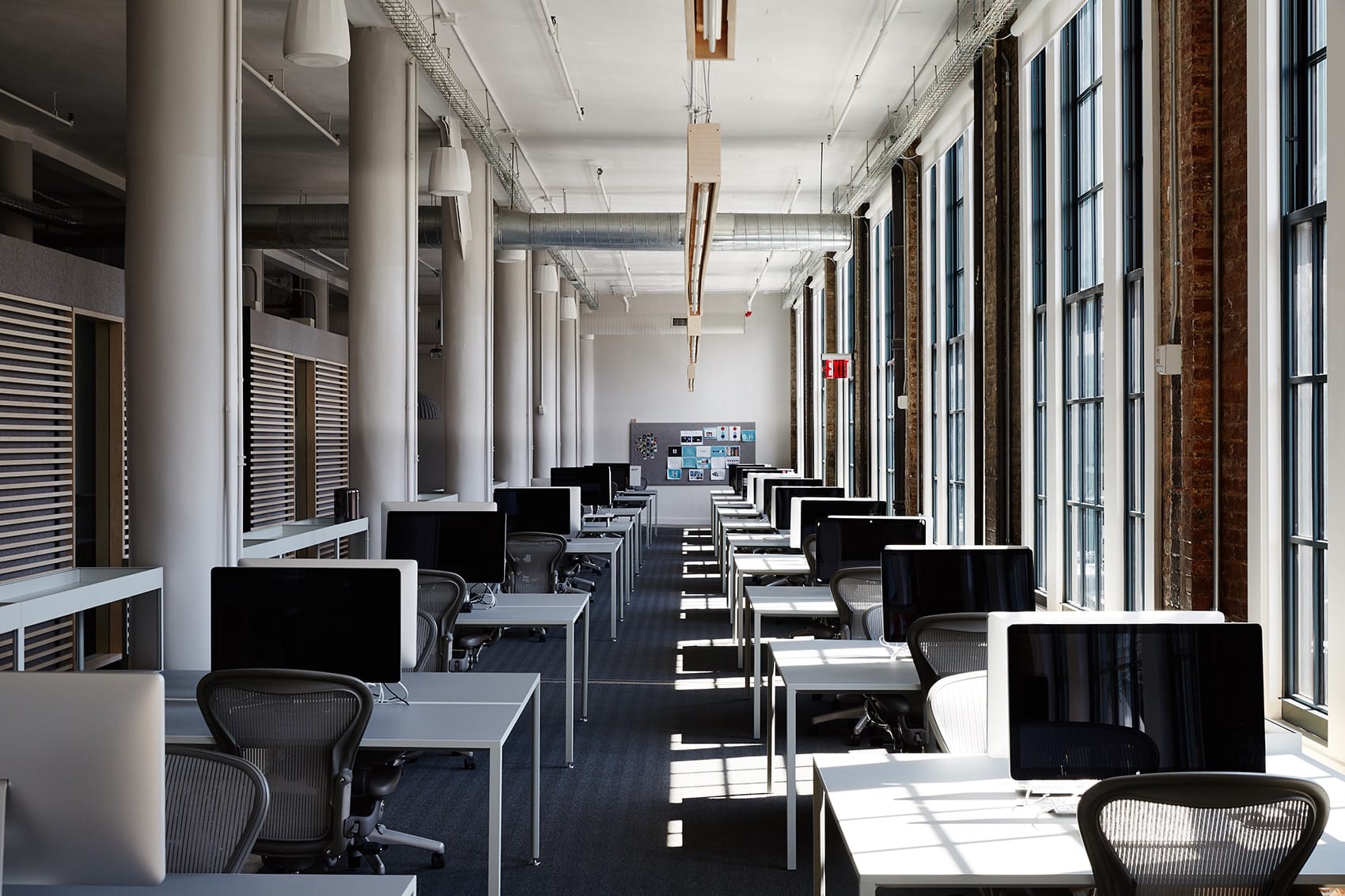
A great example of this is the Dots office in New York City, designed by Architecture AF. The studio used a narrow layout to its advantage by lining desks along the windows to let in natural light, while keeping storage and service areas neatly organized along one side. The result is a clean, open environment that feels much larger than it actually is.
7. Compact collaborative zones
Teamwork doesn’t always need a big conference room. It just needs the right kind of space.
Small offices are finding clever ways to encourage connection by creating mini zones where people can brainstorm, chat, or take a quick break together. Think cozy lounge corners with comfy seating, small pods for focused discussions, or flexible nooks.
These setups make collaboration easy without eating up valuable floor space. In open-plan offices, they also help define areas without building walls, which keeps the flow open but still giving teams a sense of privacy when they need it.
8. Bold accent pieces & statement walls
Even in a small office, a well-placed splash of color or a texture-rich wall can instantly lift the mood and make the space feel distinctive.
Statement walls (whether a mural, custom wall‑paneling, or branded graphics) act as more than décor: they become a visual focal point that speaks to your company’s style or values.
For instance, take the office of Michael K Chen Architecture (MKCA) in New York City: their lounge features a pale lavender accent wall that ties together vintage furniture, bold artwork, and rich materials. It’s a space that’s both relaxed and full of character.

9. Personalization & human-centered design
Offices work best when the people who use them feel a sense of ownership.
Giving employees a voice in design choices, like deciding on colors, furniture, or layout, can make a small space feel more functional.
Flexible desks that adjust to individual work styles, or décor that reflects the team’s personality and culture, help create a workspace where everyone feels seen and comfortable.
Small touches, like personal artwork, team-inspired wall graphics, or modular shelving for shared projects, can turn a generic office into a space that inspires collaboration.
10. Wellness-centered spaces
A small office can support the health and well-being of the people who work there. A great idea is to create quiet corners and calming areas for breaks. These give employees a chance to recharge during a busy day.
Soft, natural lighting, on the other hand, helps reduce eye strain and stress. To prevent fatigue and injury, ergonomic chairs and adjustable desks are essential. They allow each person to work in a position that suits them best.
Summary
Designing a small New York office in 2025 doesn’t have to mean compromise. Thoughtful layouts, natural textures, smart technology, and wellness-focused spaces can creatework environment that feels open, inspiring, and fully functional.
And the best part? Achieving a stylish, efficient, and personalized small office can be surprisingly affordable. By partnering with Artistic Display, an expert in commercial furniture installation solutions, you can access fully custom retail and commercial furniture tailored to your needs without breaking the budget.