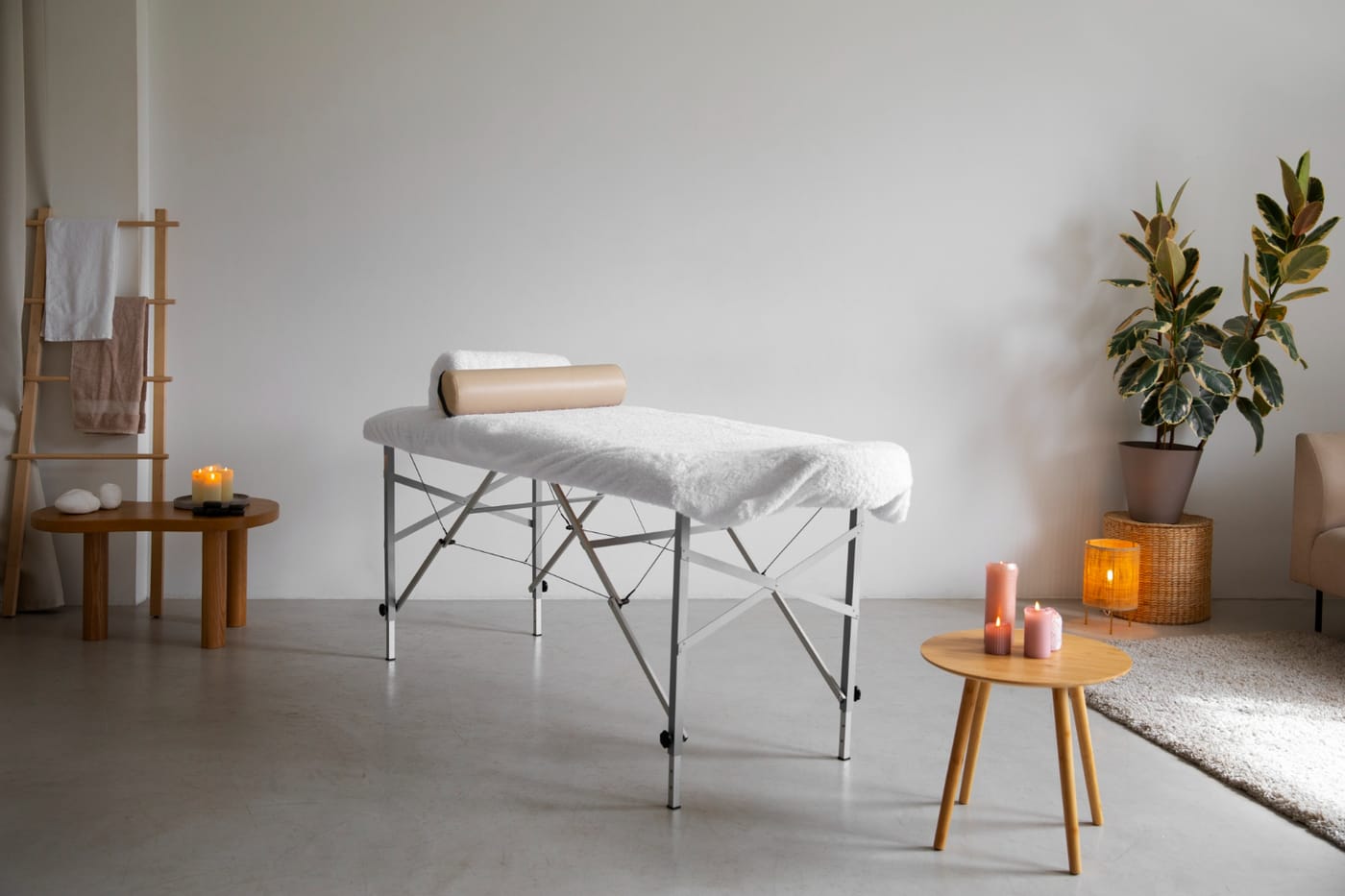
From minimalist chic to biophilic bliss, these 2026 spa interior design ideas set the trends for wellness spaces that truly rejuvenate.
In a bustling city like New York, where life moves at a fast pace, it is more important than ever to create a spa that feels like a peaceful retreat. From the heart of Manhattan to cozy Brooklyn corners, spa interior design in 2026 is all about blending modern luxury with calming, restorative elements.
Whether it’s sleek minimalist layouts, natural textures, or smart lighting that enhances relaxation, these design ideas help transform any urban spa into a quiet escape amidst the city’s constant energy.
Key Principles of Spa Interior Design
Every great spa starts with a solid foundation. Here are the main design principles that turn a space into a calm, refreshing retreat.
Balance between aesthetics and functionality
Creating a spa that truly works means finding the right balance between style and practicality. Every design choice, from the layout of treatment rooms to the materials used for furniture and flooring, should not only look beautiful but also make the space easy to use and maintain.
Thoughtful lighting, smart storage solutions, and comfortable seating all contribute to an environment that feels both inviting and functional.
Emphasis on calm, comfort, and flow
A well-designed spa guides guests through a seamless experience, with an emphasis on calm, comfort, and natural flow. Soft colors, gentle lighting, and cozy seating help create a soothing atmosphere, while thoughtful room layouts ensure movement feels effortless from the entrance to treatment areas.
Designing for the senses: sight, sound, scent, and touch
A great spa engages all the senses to create a truly immersive experience. Soft lighting and soothing colors please the eyes, gentle music or water features calm the ears, and carefully chosen scents help guests relax and feel at ease.
Textures, from plush towels to smooth wooden surfaces add a touch element that enhances comfort. When a spa carefully considers sight, sound, scent, and touch, it creates an environment that refreshes both the body and mind.
Color Palettes That Encourage Relaxation
Colors play a key role in creating a peaceful spa atmosphere, which guides guests toward relaxation.
Neutral and earthy tones (beige, sand, taupe, stone)
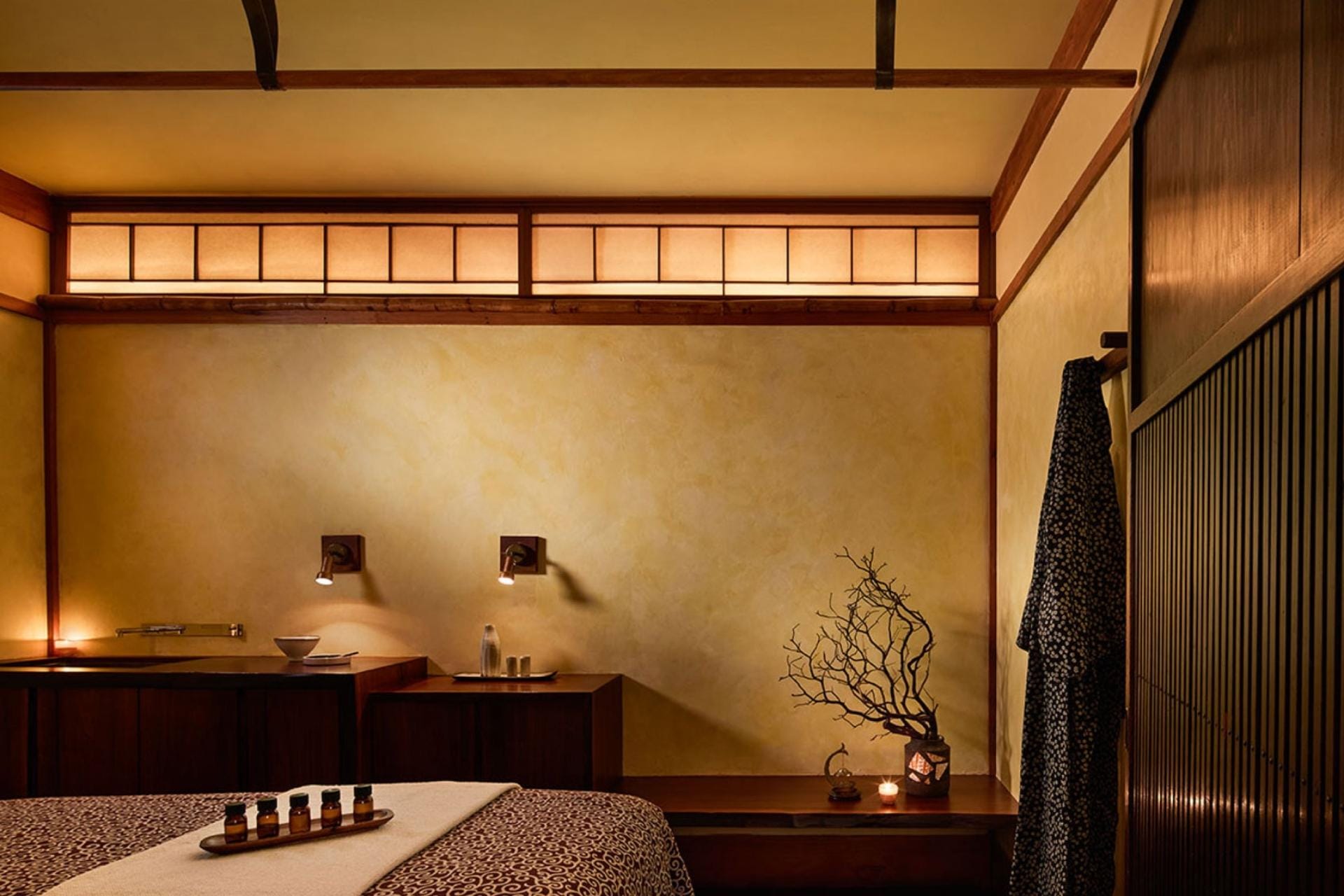
Neutral and earthy color schemes, such as soft beige, sand, taupe, and stone are among the most effective ways to make a spa feel warm, grounded, and relaxing. These tones are gentle on the eyes and create a calm backdrop that helps guests unwind as soon as they enter the space. Designers often pair them with natural materials like wood and stone to reinforce that connection to nature and comfort.
A great example in New York is Shibui Spa at The Greenwich Hotel in Tribeca, where natural materials and understated tones help balance simplicity with a sense of elegance. This makes the space feel warm and calm despite being in the midst of the city’s hustle.
Soft pastels and muted greens or blues
Soft pastels and muted greens or blues create a gentle and calming atmosphere that immediately puts guests at ease. These colors are easy on the eyes and work well in both small treatment rooms and larger relaxation areas. Muted greens create a sense of nature and freshness, while pale blues encourage relaxation and mental clarity.
Using color accents without overwhelming the space
Adding small pops of color can bring life and personality to a spa without making the space feel busy or distracting. This might include a soft cushion, a piece of artwork, or a decorative vase in a gentle shade that complements the main color palette. The key is moderation.
Natural Materials and Textures
In addition to color, the materials and textures used in a spa play a major role in creating a warm, calming environment.
Wood, stone, bamboo, and rattan elements
Natural materials like wood, stone, bamboo, and rattan bring warmth and texture into spa interiors. These elements work beautifully as ceiling beams, floors, furniture, and decorative accents. They create a sense of calm that feels close to nature rather than cold and clinical.
A standout example near New York City is Thistle Spa at Wildflower Farms in Gardiner, NY, where exposed wooden beams and stone floors paired with large windows create a relaxing retreat that blends simple, natural design with modern comfort.
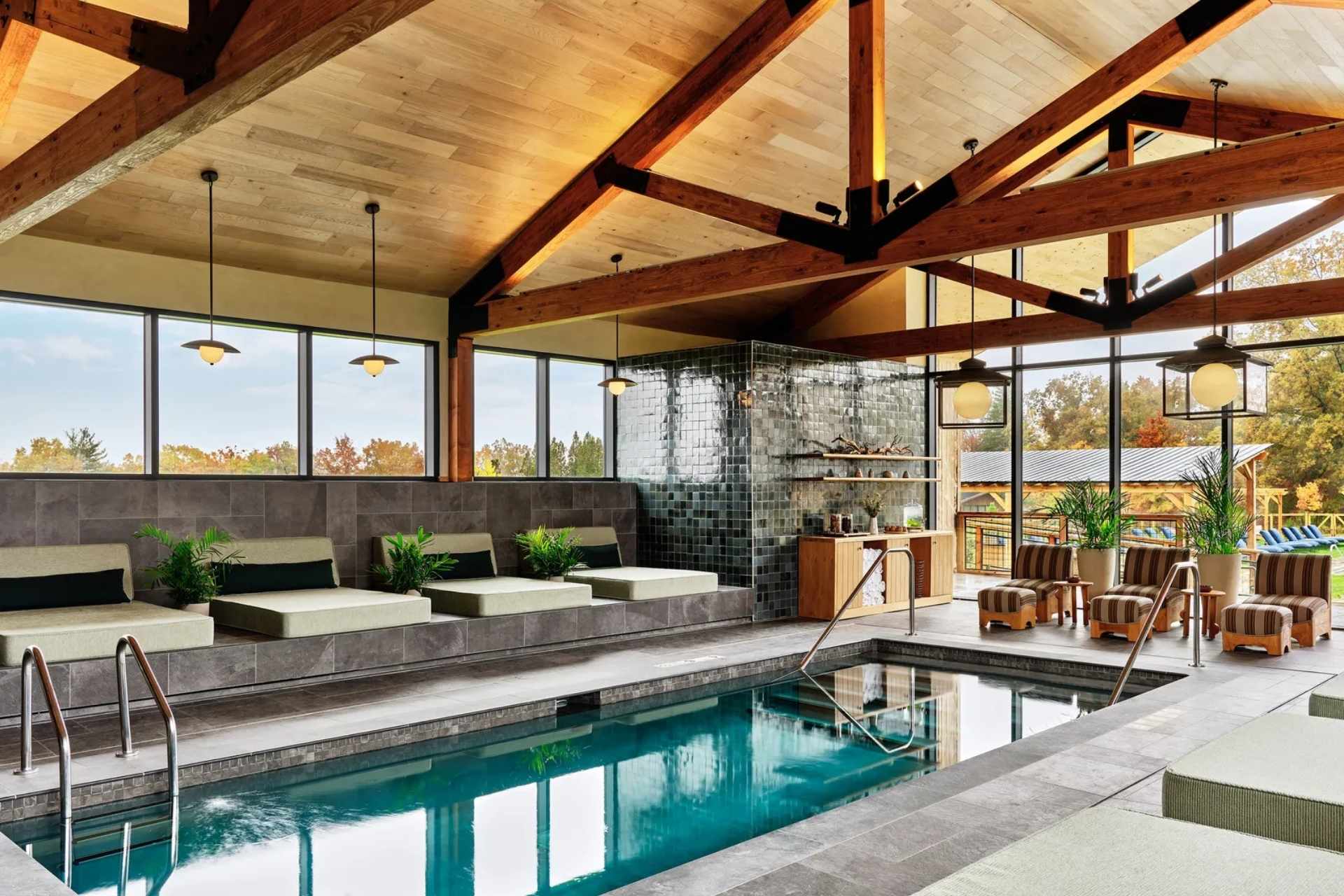
The spa’s use of these materials helps guests feel connected to the surrounding landscape while enjoying a soothing wellness experience just a short trip from the city.
Linen, cotton, and organic fabrics
Soft, natural fabrics like linen, cotton, and other organic materials add comfort and a sense of warmth to a spa’s interiors. Towels, robes, cushions, and upholstery made from these fabrics feel gentle on the skin and help create a relaxing, home-like atmosphere.
Textural contrast to add warmth and depth
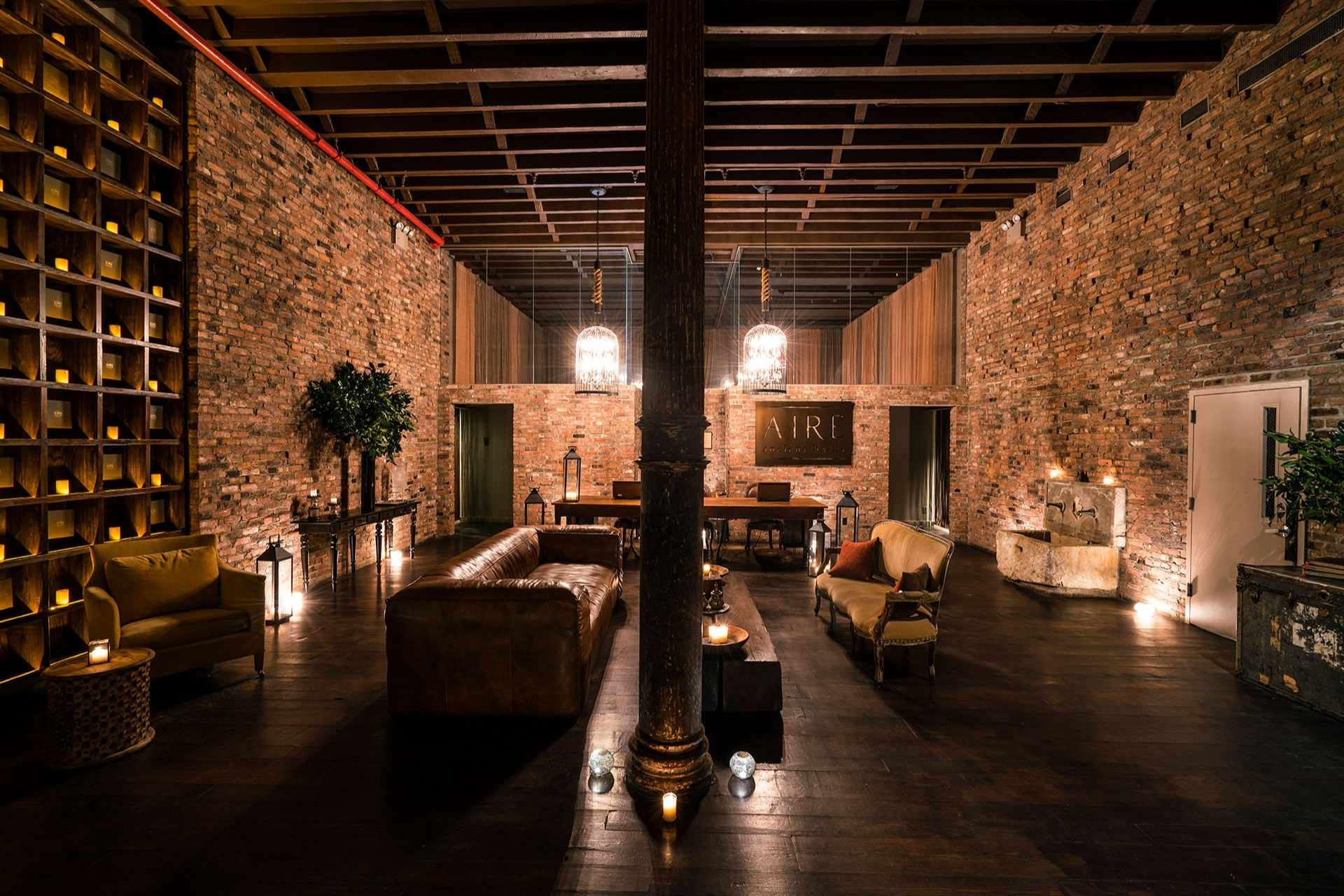
Incorporating a mix of textures helps give a spa a sense of warmth and depth, which makes the space feel inviting rather than flat. Combining smooth surfaces like stone or glass with soft fabrics, woven baskets, or natural fibers adds visual interest and comfort at the same time.
For example, AIRE Ancient Baths in Tribeca layers stone walls with plush towels, wooden furniture, and subtle metal accents to create a space that feels rich, cozy, and relaxing.
Lighting Ideas for a Soothing Atmosphere
Along with colors, materials, and textures, lighting plays a key role in creating a spa environment that feels calm, welcoming, and relaxing.
Soft ambient lighting vs. harsh overhead lights
Soft ambient lighting is one of the simplest ways to make a spa feel calm, while harsh overhead lights can feel unwelcoming. Warm wall sconces, dimmable fixtures, and hidden LED strips create gentle illumination that soothes the eyes and enhances relaxation.
In contrast, bright overhead lights can feel too intense for treatment rooms or relaxation areas, which breaks the sense of calm.
Use of sconces, pendant lights, and concealed LEDs
Using a mix of lighting fixtures, such as wall sconces, pendant lights, and concealed LED strips, can create a soft, layered glow that enhances the spa’s relaxing atmosphere. Wall sconces add gentle light along pathways and walls. Pendant lights provide focused illumination in treatment areas. Hidden LED strips highlight architectural features or create a subtle ambient effect.
Maximizing natural light while maintaining privacy
Natural light can make a spa feel bright, open, and uplifting, but too much exposure can compromise guests’ privacy. Designers often use frosted or textured glass, sheer curtains, or strategically placed partitions to let in sunlight while keeping treatment areas discreet.
Skylights, large windows with greenery outside, and light wells can also bring in daylight without making guests feel exposed.
Incorporating Nature Into Spa Design
Natural elements, like greenery, flowing water, and stone accents, create a serene environment that soothes the senses.
Indoor plants and greenery walls
Indoor plants and greenery walls bring life and freshness into a spa, which helps create a calming, natural atmosphere. Hanging greenery, potted plants, and living walls not only add visual interest but also improve air quality and make spaces feel more inviting.
These natural elements can soften hard surfaces, complement neutral color palettes, and provide a sense of privacy in open areas.
Water features such as fountains or reflecting pools
Water features, like fountains or reflecting pools, add a sense of calm and tranquility to a spa environment. The gentle sound of flowing water helps mask city noise and creates a peaceful background that encourages relaxation. Visually, a reflecting pool or small fountain can serve as a focal point, which adds elegance and a natural touch to the space.
Biophilic design principles for wellness spaces
Biophilic design focuses on connecting people with nature to improve well-being and reduce stress. This can include natural materials, abundant daylight, indoor plants, water features, and views of greenery or the outdoors.
When nature is brought into a spa’s design through plants, water features, and natural light, guests often feel calmer and more connected to their surroundings.
Reception and Waiting Area Design Ideas
The first space guests encounter sets the tone for their entire spa experience, which makes thoughtful reception and waiting area design essential for creating a welcoming and relaxing environment.
Welcoming front desk design
The front desk is the first point of contact for guests, and its design plays a crucial role in setting a welcoming tone. A front desk with warm materials, soft lighting, and uncluttered surfaces immediately signals calm and professionalism.
Incorporating natural elements like wood, stone, or subtle greenery can enhance the inviting feel, while a thoughtful layout ensures staff can greet guests efficiently.
Comfortable seating and calming visuals
Comfortable seating and soothing visuals are key to making guests feel relaxed even before their treatments begin. Plush chairs, soft cushions, and cozy lounges provide a welcoming space for guests to wait. Calming images, natural artwork, or serene wall colors help create a peaceful atmosphere.
First impressions that set the tone for relaxation
The first impression guests receive when entering a spa can shape their entire experience. A serene reception area, soft lighting, gentle sounds, and natural materials immediately signal calm and invite relaxation.
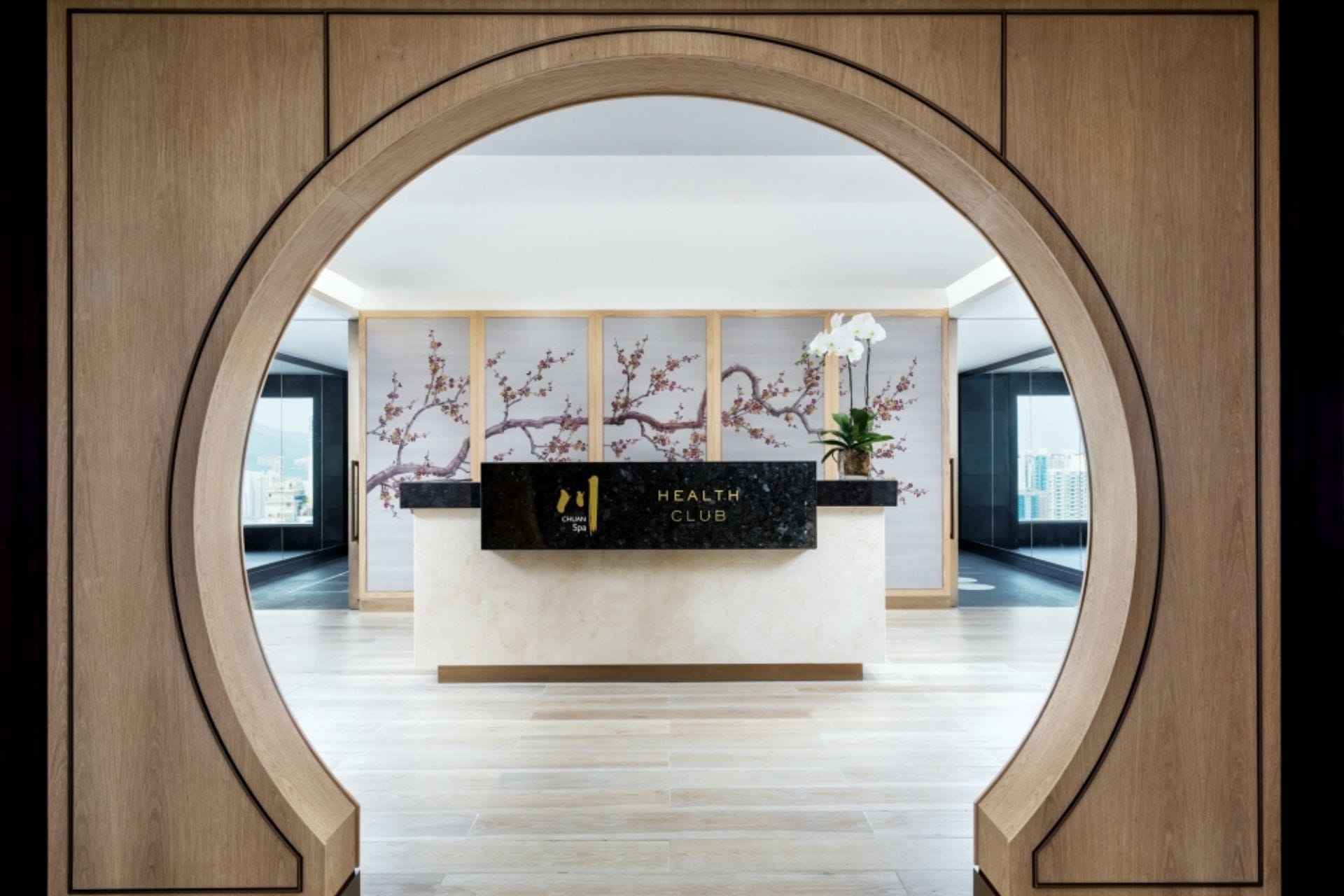
In New York, Chuan Body + Soul Spa at The Langham uses a combination of subtle lighting, warm wood accents, and quiet water features at the entrance.
Designing Spa Treatment Rooms
After setting the tone in reception and waiting areas, thoughtful design of treatment rooms ensures that guests experience comfort, calm, and privacy throughout their spa journey.
Soundproofing and acoustic considerations
Sound plays a key role in creating a relaxing spa experience, so treatment rooms should be designed to minimize outside noise and enhance soothing sounds. Use acoustic panels, thick doors, plush carpeting, and soft wall treatments. Background sounds such as gentle music, water features, or nature recordings can further enhance relaxation.
Storage solutions that keep the space clutter-free
Effective storage is essential for keeping spa treatment rooms organized, functional, and calming. Cabinets, shelves, and hidden compartments allow towels, oils, and equipment to be neatly tucked away, so the space feels open and uncluttered.
Related: The Benefits of Getting Customized Furnitures for Your Business
Creating a personalized yet consistent spa experience
Providing a spa experience that feels both personal and consistent helps guests feel valued while maintaining high standards of service. Personal touches, such as customized treatments, preferred room temperatures, and attention to individual needs, make each visit feel unique.
At the same time, consistent design elements, ambient music, layout, and lighting ensure that every guest experiences the same sense of calm and quality.
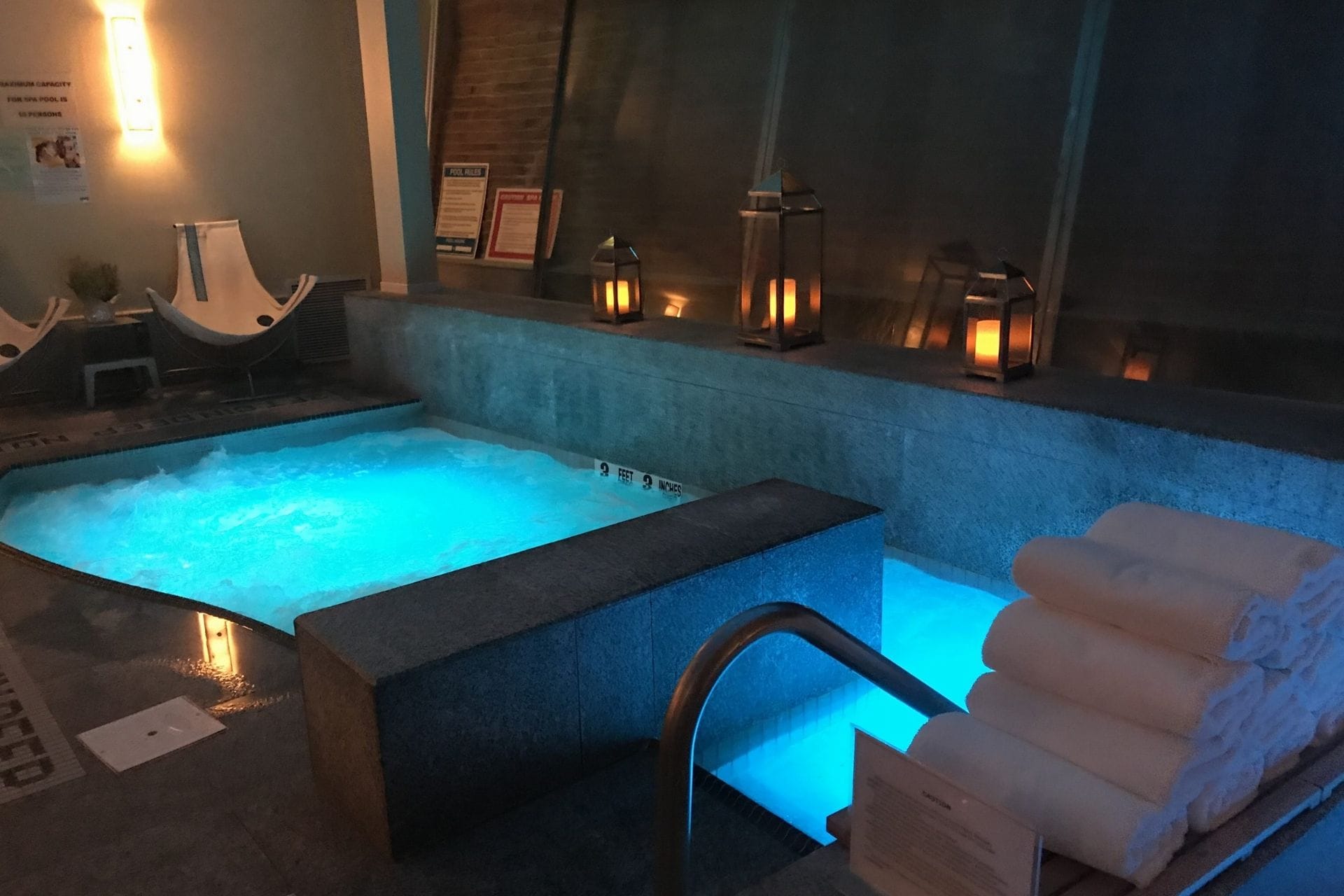
Great Jones Spa in NoHo, New York, is a strong example of creating a personalized yet consistent spa experience. Guests can customize treatments, from massage techniques to room ambiance, while each treatment room follows a consistent design style.
Luxury Spa Design Touches
Adding a few luxurious details can make a spa feel extra special, which helps guests feel pampered from the moment they arrive.
High-end finishes and custom details
High-end finishes and custom details give a spa a sense of sophistication and exclusivity. Materials like marble countertops, polished stone floors, brass or brushed metal fixtures, and custom cabinetry not only look elegant but also enhance durability and functionality.
Thoughtful custom touches, such as personalized lighting, handcrafted furniture, or bespoke décor, further elevate the atmosphere.
Scent diffusers and curated music
Scent and sound play a powerful role in creating a luxurious, immersive spa experience. Carefully chosen fragrances, through essential oil diffusers or subtle aromatherapy, can calm the mind and enhance relaxation. Curated music or nature-inspired sounds, on the other hand, set the mood and mask background noise.
Together, these sensory touches make the spa feel more inviting, sophisticated, and tailored to each guest’s experience.
Thoughtful amenities that elevate the guest experience
Small, thoughtful amenities can make a big difference in how guests perceive a spa experience. Plush robes and slippers, high-quality skincare products, infused waters, cozy towels, and well-stocked relaxation areas show attention to detail and care for guests’ comfort. These elements help create a sense of indulgence and enhance the overall feeling of luxury.
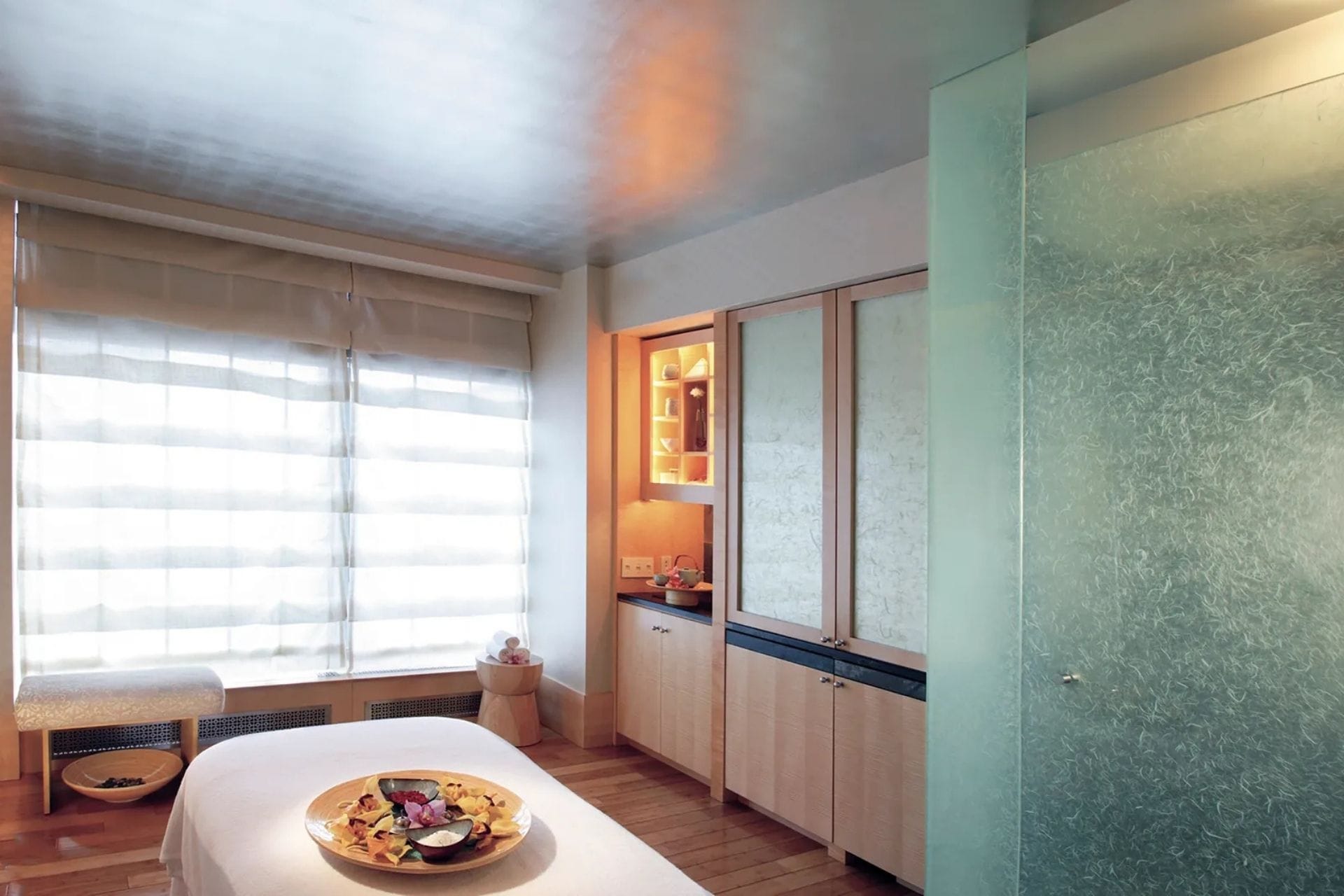
The Spa at Mandarin Oriental in New York offers guests premium amenities such as plush linens, curated teas, and exclusive wellness products. These thoughtful details ensure every visit feels personalized and memorable.
Summary
In 2026, spa design emphasizes calm, comfort, and luxury. From soothing colors and natural materials to thoughtful lighting, sound, and treatment rooms, every element creates a restorative experience. Custom furniture, smart storage, and high-end finishes ensure the space remains cohesive, welcoming, and truly relaxing.
Looking to bring these ideas to life? Artistic Display, a company that specializes in commercial furniture installation, offers tailored solutions for both beauty and performance. With expertly crafted pieces designed to fit each space perfectly, we help transform spa interiors into serene retreats that leave a lasting impression on guests.