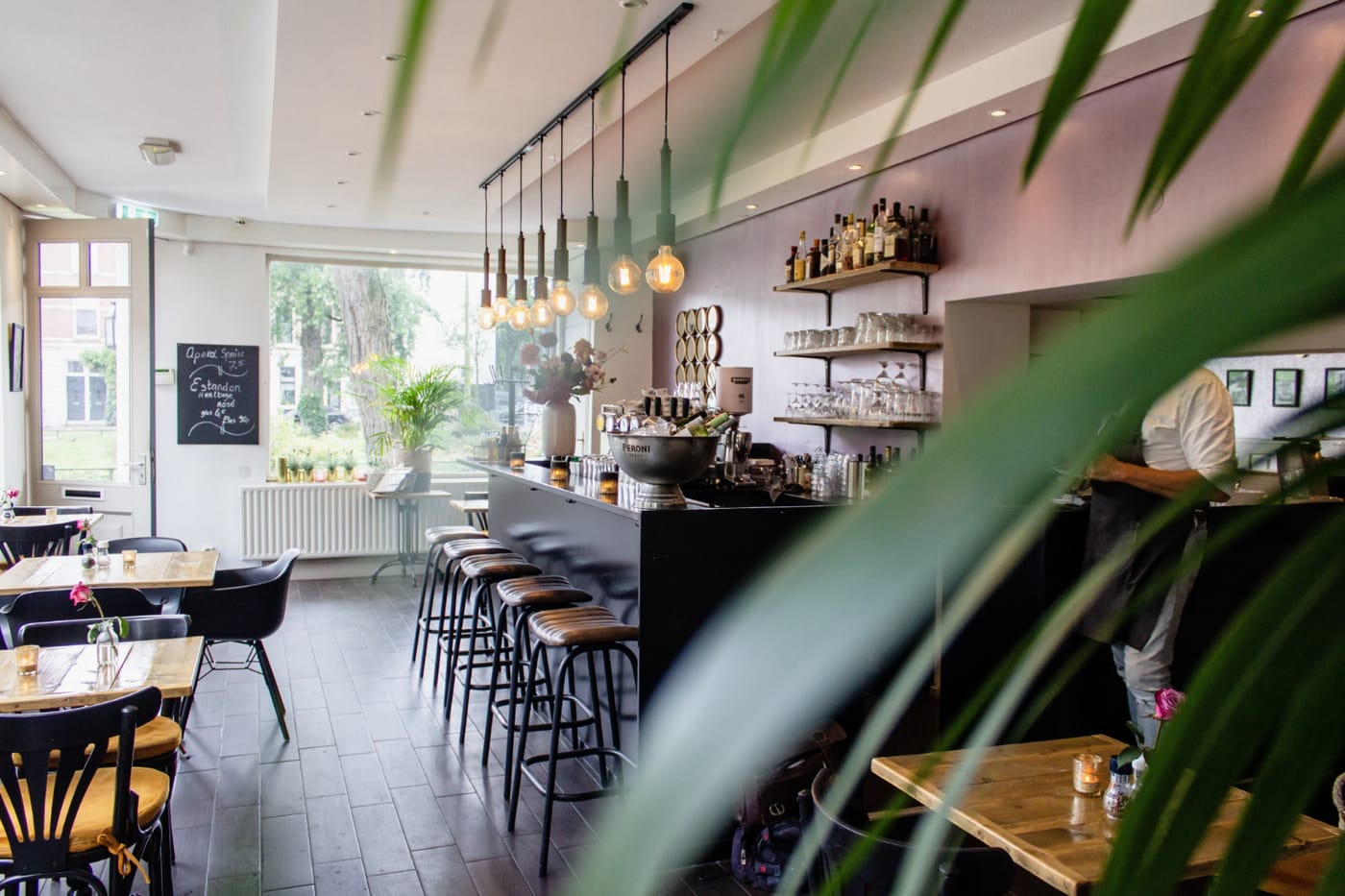
Stay ahead of the curve in 2025 by embracing restaurant design trends that blend innovation, comfort, and memorable guest experiences.
Restaurant design has evolved far beyond aesthetics. It’s now a blend of art, psychology, and technology. Before 2020, the focus was on ambience and brand image, but post-pandemic priorities shifted toward comfort, safety, and flexibility.
In 2025, design trends reflect this new mindset, blending function, emotion, and innovation. Diners seek spaces that feel authentic, welcoming, and memorable. From tech-integrated experiences to eco-friendly materials and storytelling interiors, every element shapes how guests connect with a brand.
Remember that great design goes beyond looks. It creates experiences that engage the senses, inspire connection, and leave a lasting impression.
In this article, we’ll guide you through the top 10 restaurant design ideas and trends shaping 2025.
Factors to Consider When Designing a Restaurant in 2025
Whether you’re opening a cozy café in New York City, a farm-to-table bistro in Albany, or a fine-dining spot in Buffalo, these considerations will help ensure your space is both functional and memorable.
Brand Identity
Your restaurant’s design should reflect its personality and values. Color schemes, materials, lighting, and furniture all communicate your brand story. A strong, cohesive design makes your concept instantly recognizable and helps customers connect with your vision.
Customer Journey
Think about how guests move through your space, entering the door, settling in, dining, and then leaving. Layout, seating arrangements, and flow impact not only comfort but also how diners experience your service.
For example, at The Modern in Midtown Manhattan — overlooking the sculpture garden at the Museum of Modern Art — the architecture and interior design consciously guide guests from the luminous glass entrance wall into the main dining room.
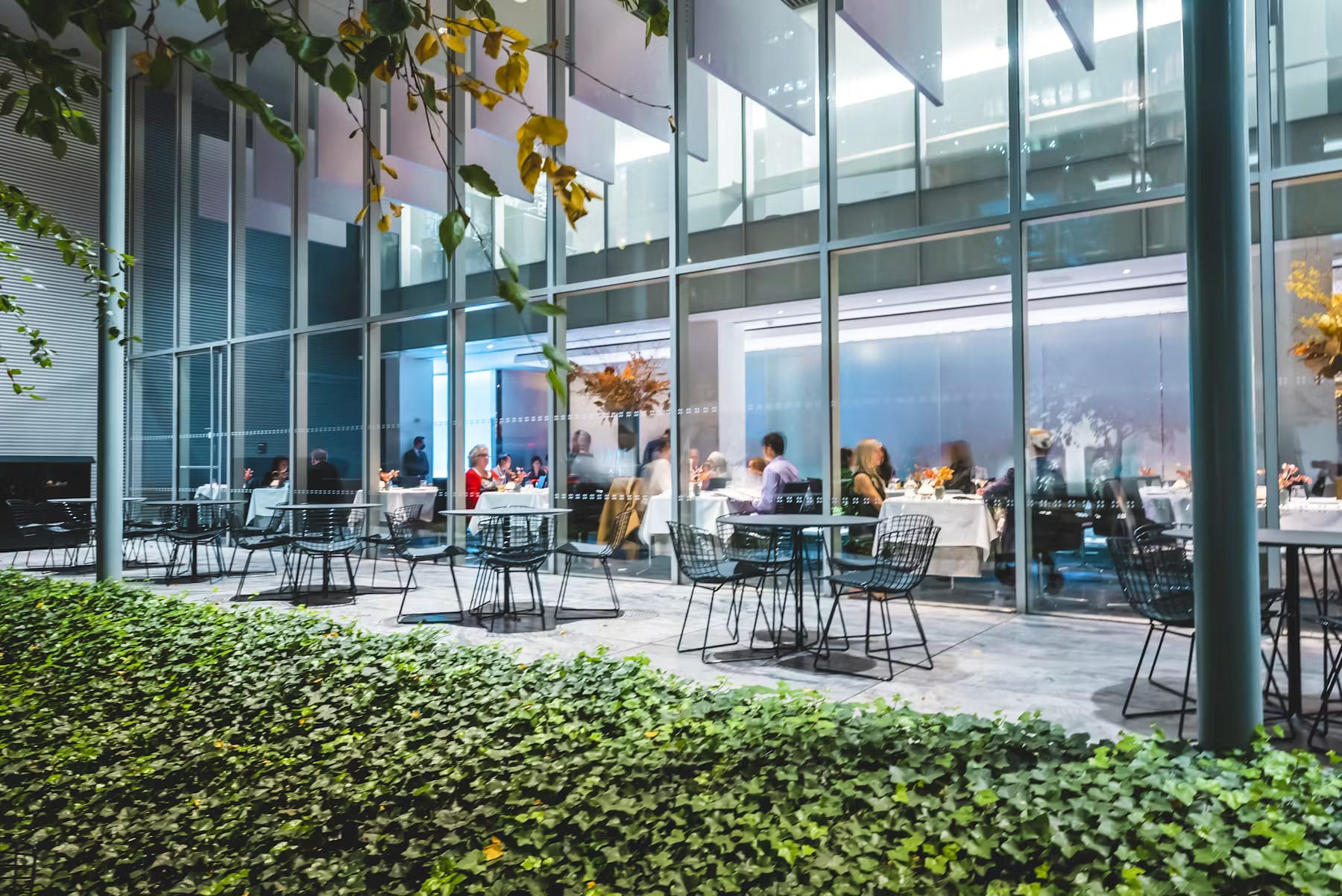
The clear path and unobstructed sight lines enhance the feeling of arrival and make the space easy to navigate.
Functionality
Design isn’t just about beauty — it’s about efficiency. Staff workflows, kitchen accessibility, and seating arrangements must support smooth operations. Functional design ensures service is seamless and reduces stress for both employees and guests.
Budget & ROI
Investing in design should balance aesthetics with practicality. Consider costs for materials, furnishings, and technology while keeping potential returns in mind.
A helpful tip is to prioritize high-impact areas, such as the entrance, main dining room, and bar, where design choices can create the strongest impression on guests without exceeding your budget.
Sustainability
Eco-friendly practices are increasingly important to diners. Incorporating sustainable materials, energy-efficient lighting, and waste-reducing features not only supports the environment but also appeals to conscious consumers.
Technology Integration
Modern diners expect technology to enhance their experience. Digital ordering systems, contactless payments, smart lighting, and climate control are just a few ways that integrating the right technology improves convenience, efficiency, and overall satisfaction.
10 Restaurant Design Ideas & Trends in 2025
Let’s take a closer look at the top design concepts transforming restaurants this year:
1. Sustainable & Eco-Friendly Interiors
Incorporating elements of nature, such as indoor greenery, living walls, or natural materials, can bring a sense of calm while promoting an eco-conscious atmosphere.
Biophilic design not only enhances aesthetics but also improves air quality and creates a restorative environment for diners.
2. Open Kitchen Concepts
Open kitchens showcase the preparation of food with a sense of transparency and authenticity that diners appreciate. They also add an element of entertainment, as guests can watch chefs at work.
Take, for example, Kabawa in New York’s East Village, where the sweeping U‑shaped counter surrounds a three‑sided open kitchen and creates an immersive viewing experience.

3. Tech-Driven Dining Spaces
Modern restaurants are embracing technology to make dining smoother, faster, and more engaging. Smart lighting can adjust the mood throughout the day, digital menus and self-order kiosks speed up service, and AI-assisted systems help staff anticipate customer needs.
Some restaurants even use augmented reality menus. This would allow diners to see a 3D preview of their dishes or interact with digital elements at the table.
4. Local Culture & Storytelling Design
Design that reflects local heritage, art, or materials helps a restaurant stand out while creating a deeper connection with diners.
By incorporating elements unique to the city or neighborhood — whether through murals, handcrafted furniture, or regionally inspired décor— restaurants can tell a story that feels authentic and memorable.
5. Flexible & Multi-Functional Layouts
Adaptable furniture, such as folding tables, moveable banquettes, or stackable chairs, makes it easy to switch between a casual lunch service, an evening event, or a private dining setup.
Modular seating and partitions support this flexibility, which lets you reconfigure the space quickly for pop‑ups, group bookings, or changing guest flows.
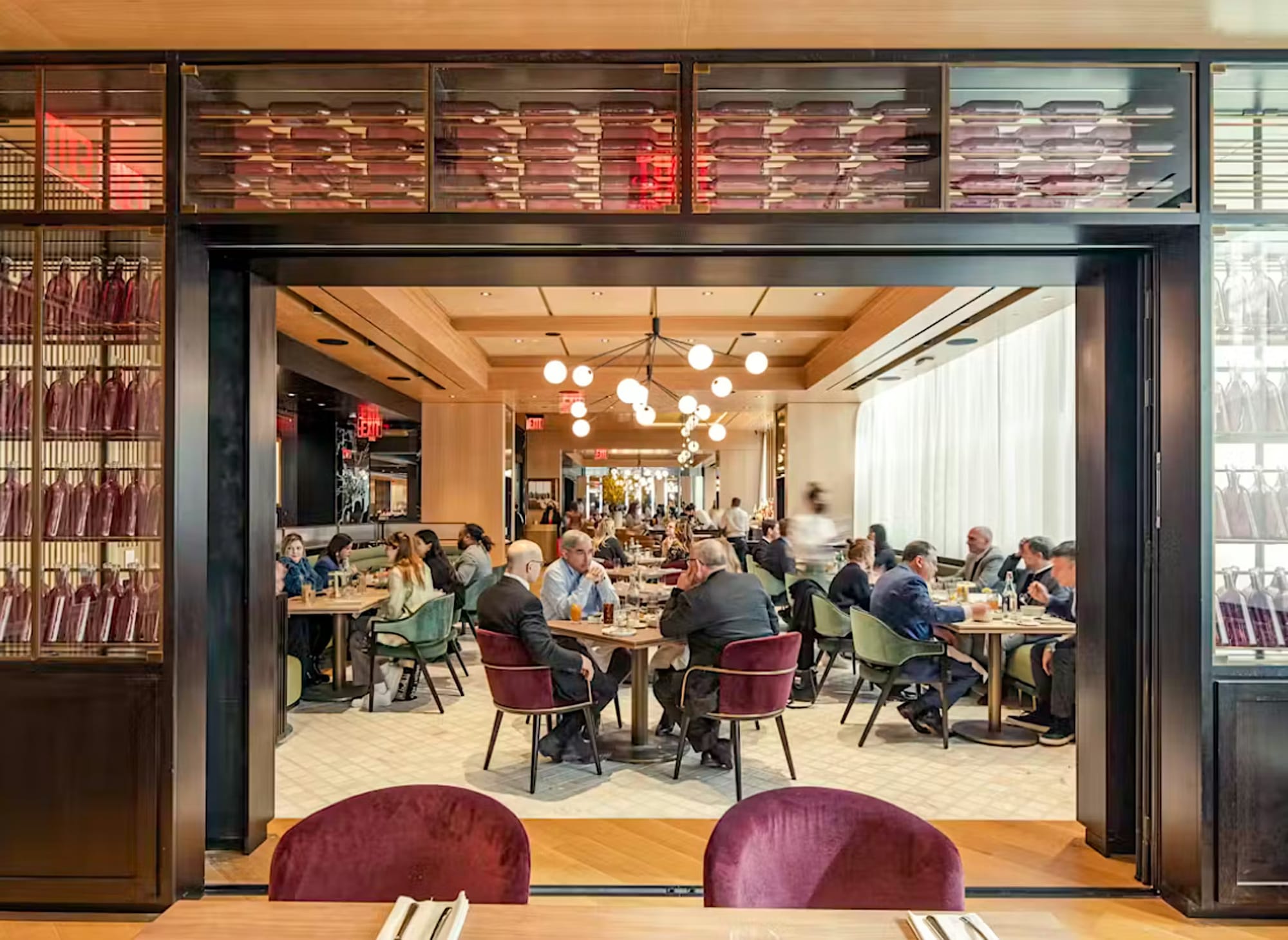
At The Landing in Midtown Manhattan, sliding glass doors and flexible furniture let the dining area transform seamlessly between open‑plan restaurant mode and enclosed event space.
6. Comfort-Focused Interiors
In 2025, diners increasingly seek spaces that feel cozy and welcoming, almost like a home away from home. Designers are responding with soft velvet seating, wooden tables, woven rugs, and warm-toned fabrics, combined with gentle lighting and thoughtful personal touches.
7. Bold Colors & Artistic Statements
Many restaurants are embracing vibrant, expressive interiors that move beyond minimalist trends. Sculptural lighting fixtures add drama and focus to key areas. Textured walls create depth and tactile interest. Striking murals inject personality and make the space memorable.
Each element works together to leave a lasting impression on diners.
8. Outdoor & Al Fresco Dining Expansion
As diners increasingly seek fresh-air experiences, restaurants are creating garden-inspired seating areas that feel both inviting and comfortable. Shaded canopies, abundant greenery, and climate-conscious features like misting systems or heated lamps help make outdoor spaces usable year-round.
A great example is Robert, a rooftop restaurant in Brooklyn, where lush plant arrangements, retractable awnings, and strategically placed heaters allow guests to enjoy the skyline in comfort regardless of the season.
9. Immersive & Experiential Dining
Restaurants are evolving into full sensory experiences where décor, lighting, and sound all work together to tell a story. Themed interiors are paired with storytelling menus — each dish designed to reflect a narrative or emotion. Every meal is turned into a memorable journey.
10. Minimalist Luxury
This trend embraces sophistication through simplicity by favoring refined materials like marble, glass, and matte finishes to create a high-end look without excess.
Every detail, from the smooth curve of a chair to the subtle glow of pendant lighting, is chosen with purpose. Rather than filling spaces with elaborate décor, designers highlight quality craftsmanship and thoughtful textures that let the architecture and materials speak for themselves.
The result is a dining environment that feels both luxurious and serene.
Summary
Designing a restaurant today means balancing innovation, comfort, and authenticity. Thoughtful layouts, immersive storytelling, and a focus on comfort and sustainability all play a role in how guests perceive your brand.
For a truly distinctive space, consider Artistic Display. We offer commercial furniture installation solutions that blend functionality, quality, and design. We’ll help your New York restaurant make a lasting impression.